Best Worm Composter Indoor: 10 Bins for Kitchen Scraps this year
If you buy something through an Amazon affiliate link on this page, we may earn a commission as an Amazon Associate. There is no extra charge to you.
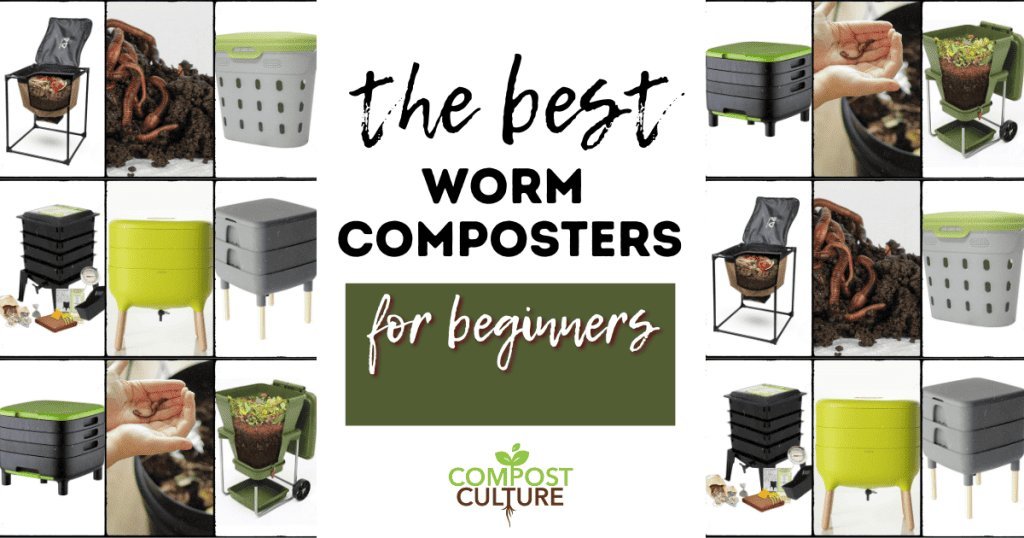
Worm composting indoors comes down to a simple choice: trays you stack, or a bag you empty from the bottom. Trays let you harvest a layer at a time. Bags and buckets ask less of your hands. The nine bins below split on capacity, how the castings come out, and what the seller puts in the box.
Best overall: VermiHut Plus 5-Tray — five trays, a worm saver tray, and a lid built for airflow and moisture balance. Best two-tray starter: FCMP Essential Living 2-Tray — migration tunnels and a water retention channel help worms move and bedding stay damp. Easiest to harvest: Urban Worm Bag V2 — feed from the top, collect castings from the bottom, no separating worms from trays.
How We Picked

1. The Original VermiHut® Plus 5-Tray Worm Composter

Best for: The first-time indoor composter who wants room to grow.
The VermiHut Plus holds five trays in a compact footprint, so you can start with one and add layers as your scraps pile up. The lid carries a built-in V-Board and coconut mat, which the listing ties to airflow and moisture balance.
The worm saver tray keeps worms and compost out of the liquid collection area, so the bottom stays a liquid zone rather than a worm trap. Base feet let you add water to keep ants from walking in. This isn’t the bin for dumping the whole thing out at once — it’s built around working one tray at a time.
Pros
- Five stackable trays in a compact footprint
- V-Board and coconut mat support airflow
- Worm saver tray keeps the base clear
Cons
- Tray-by-tray harvest takes more handling
2. FCMP Essential Living 2-Tray

Best for: The beginner who wants the simplest possible start.
Simplicity is the point here. The Essential Living Composter asks you to learn the rhythm of feeding and bedding before you juggle a whole stack of layers, and the listing builds in help: a water retention channel, 52 angled migration tunnels, and aeration support points.
The reservoir collects worm tea, which the listing says to mix one part tea with one part water for plants. The body is BPA-free, UV-inhibited recycled polypropylene, made in Canada. Worms aren’t included, so you buy those separately — that’s the one thing to sort out before the bin arrives.
Pros
- Two trays keep the routine simple
- 52 migration tunnels per tray
- Worm tea reservoir with a stated mixing ratio
Cons
- Worms aren’t included with the unit
3. Urban Worm Bag Worm Composting Bin Version 2

Best for: The composter who dreads separating worms from castings.
The Urban Worm Bag V2 is a continuous flow bin: feed through the top, take finished castings from the bottom. There’s no separating worms from trays, and the 2021 design eliminates the bottom zipper.
The 900D oxford fabric body has a detachable part you can keep open or closed to control moisture. Assembly is listed at under five minutes with no tools, glue, or confusing instructions.
Pros
- Feed top, harvest bottom, no tray sorting
- Zipper-free bottom on the 2021 design
- Sets up in under five minutes without tools
Cons
- Fabric body rather than rigid trays
4. Worm Factory Basic 3-Tray

Best for: The buyer who wants everything in the box on day one.
The starter kit is the story here. Along with three stackable trays, the Worm Factory Basic includes a coir brick, pumice, bedding, a scraper, a printed startup guide, and an 80-page online manual plus video tutorial. For a first bin, that removes most of the guesswork about what bedding to buy.
Pros
- Complete starter kit with coir, pumice, and bedding
- 80-page manual and video tutorial included
- Made in the USA
Cons
- Three trays is the stated tray count
5. Maze Worm Farm

Best for: The gardener who keeps the bin on a patio or balcony.
The Maze Worm Farm ships as a full set: two working trays, a lid, a base, a worm-saver tray, a liquid collection tray, and coconut peat. Having a spare working layer means you can rotate one out when it fills, and the worm-saver tray slides out easily. The lid lifts and hangs out of the way while you work.
Pros
- Two working trays to rotate when full
- Worm-saver tray slides out easily
- Made from recycled material
Cons
- Two working trays to rotate
6. VIVOSUN 3-Layer Worm Compost Bin

Best for: The apartment dweller with limited counter or floor space.
The VIVOSUN holds up to 30 L (8 Gal) of scraps in a three-layer stack that takes up minimal space. Sturdy PP plastic and ventilation slits handle aeration and odor, and the listing ties that airflow to moisture and temperature control plus keeping worms in and pests out.
A spigot on the base tray drains worm tea. The all-in-one package includes four anti-slip foot pads, a 250ml measuring cup, a soil meter, a rack, a rubber scraper, non-woven fabric, and gloves.
Pros
- 30 L capacity in a compact three-layer stack
- Spigot drains worm tea from the base
- Includes soil meter, gloves, and measuring cup
Cons
- 30 L is the stated maximum capacity
7. Worm Bucket Indoor Composting Starter Kit – 2.5-Gallon Worm Farm

Best for: Teachers and homeschool parents running a hands-on project.
The Worm Bucket is built around a 2.5-gallon bin, sold as an educational composting project for classrooms, homeschool, and apartments. Everything needed to start is in the box: a coco coir bedding brick, a perlite drainage bag, and a spigot for brewing tea, plus two full-color setup and feeding guides.
Those guides are the real reason this suits a classroom — students can follow the feeding routine themselves. It isn’t the bin for a household trying to process a week of kitchen scraps, since 2.5 gallons is a small working volume.
Pros
- Complete kit, just add worms
- Two full-color setup and feeding guides
- Spigot for brewing worm tea
Cons
- 2.5-gallon bin
8. FCMP Essential Living 4-Tray

Best for: The household that generates scraps every day.
This is the Essential Living design with double the working layers. More trays means you can run batches at different stages.
The reservoir collects worm tea for mixing one part tea to one part water. Worms aren’t included. This isn’t the pick for someone who wants the smallest possible bin.
Pros
- Four trays for batch composting
- 52 migration tunnels per tray
- BPA-free recycled polypropylene, made in Canada
Cons
- Worms aren’t included with the unit
9. Blütezeit 5-Tray Worm Compost Bin

Best for: The serious composter who wants the biggest working volume.
The Blütezeit lists a 13 Gal (50L) capacity over its stacked layers. Air holes in every tray handle ventilation and odor, and the PP build is designed for stacking bedding, trays, and worms. The listing pitches it at both beginners and experienced composters.
The all-in-one kit is unusually complete: a turning fork, shovel, soil meter, non-woven fabric, coco-coir brick, anti-slip feet, cup, and a spigot for worm tea, plus a user manual. Worms aren’t included. This isn’t the bin for a small kitchen with no floor space — 53 quarts takes up room.
Pros
- 13 Gal (50L) capacity spread over stacked layers
- Includes turning fork, shovel, and soil meter
- Spigot for collecting worm tea
Cons
- Worms aren’t included
Also Worth Considering
The Original Vermihut ® 5 is a stacked worm composter in a terracotta color, for indoor and outdoor use. The Arcadia WN55 Composting Bin Kit is a four-tray worm composting bin kit for recycling food waste into castings and worm tea.
How to Choose in Sixty Seconds
How many trays do I actually need?
Match trays to how much you cook. A taller stack lets you run batches at different stages, so one is finishing while another is filling. If your household throws out scraps daily, start with more trays than you think you need.
Do I need to buy worms separately?
For most of these bins, yes. The Worm Bucket Starter Kit is sold as a kit where you just add worms, with the bin, coco coir bedding brick, perlite drainage bag, and spigot in the box.
What should I check before ordering?
Confirm three things: the capacity in gallons or liters, whether worms and bedding are included, and how the castings come out.
Is a small bin enough for a whole household?
Usually not. Once you’re composting for three or more people, the larger five-tray and four-tray units give you the working room to keep up.
Related guides
- Why Every Kitchen Needs a Garlic Rocker
- All Benefits of Can Opener for Every Kitchen
- How to Clean Can Opener for a Germ-Free kitchen
Frequently Asked Questions
What do I need besides the bin?
Worms and, for some units, bedding. The FCMP Essential Living bins state that worms aren’t included. The Worm Factory Basic 3-Tray and the Blütezeit 5-Tray 53QT both ship with a coco coir brick, and the Worm Bucket Starter Kit includes coir bedding and a perlite drainage bag.
What goes wrong first?
Odor and moisture, which is why every bin here lists ventilation. The VIVOSUN 3-Layer 30L uses ventilation slits for aeration and odor control, and the Blütezeit 5-Tray 53QT puts air holes in each tray. The VermiHut Plus adds base feet so you can add water and keep ants out.
Is the simplest bin on the list enough?
For one or two people, often yes. The FCMP Essential Living 2-Tray keeps the routine to two layers, and the Worm Bucket Starter Kit runs on a 2.5-gallon bin with two setup guides. If your scraps pile up faster than the bin clears them, move up to a four or five-tray unit.
Closing
For most indoor setups, the VermiHut Plus 5-Tray is the pick: five trays, a worm saver tray, and a lid built for airflow. The FCMP Essential Living 2-Tray is the better first bin if you want a simpler routine. Whichever you choose, sort out your worms and bedding before the bin arrives.

Hi, I’m Emma Carter, a passionate home cook with over 12 years of hands-on experience in home kitchens. I love testing kitchen tools, trying new recipes, and helping everyday cooks make smarter buying decisions. Every review and guide I write is based on real cooking experience, practical testing, and honest opinions, not marketing claims.