What Grit Sharpening Stone for Kitchen Knives: Expert Guide
If you’re new to sharpening kitchen knives, you might wonder: What grit sharpening stone is best for kitchen knives? The answer depends on your knife’s condition and what you want, sharpening, repairing, or just keeping the edge keen. For most kitchen knives, a medium grit sharpening stone (around 1000 grit) is the best all-around choice. It’s good for regular sharpening and works for chef’s knives, paring knives, and even Japanese blades. But to get the best results and longest edge life, you often need more than one grit. Let’s break down why grit matters, when to use each type, and how to sharpen safely and effectively, so you can keep your knives cutting like new.
Who Needs This Guide?
If you’re a home cook, a beginner in knife sharpening, or someone frustrated with dull knives, this article is for you. Many people buy quality knives but don’t know how to keep them sharp. Others are confused by the numbers on sharpening stones or wonder if they need a whetstone, honing steel, or something else. You’ll learn everything you need to pick the right grit, avoid common mistakes, and care for all types of blades, Western and Japanese.
Why Grit Size Matters
The grit size of a sharpening stone controls how much metal it removes from your knife. Think of it like sandpaper: lower numbers (like 200–400) are rough and remove a lot of metal quickly. Higher numbers (like 3000–8000) are smooth and polish the edge. Choosing the right grit means your knife gets sharp without wearing out fast.
A 1000 grit stone is a balanced starting point. It’s rough enough to sharpen a dull knife but fine enough to avoid scratches. For most kitchen work, this is the “main” sharpening step. But there’s more to the story—let’s look at the options.
Types Of Grits Explained
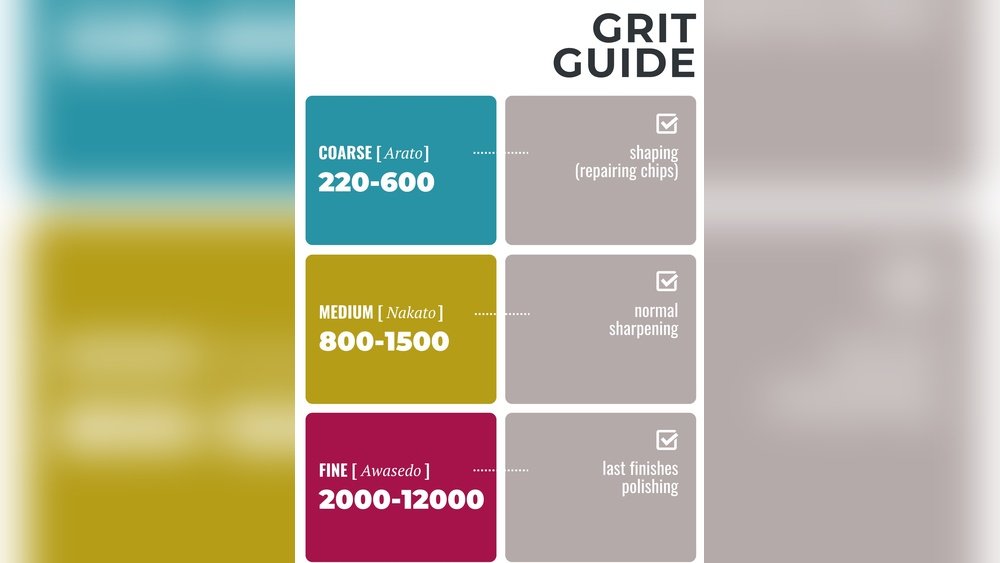
Coarse Grit (200–400)
Use coarse stones only when your knife is very dull or has chips. These stones remove a lot of metal and reshape the edge. This is rare for most home cooks. If your knife can’t cut tomatoes or paper, start here.
Medium Grit (800–2000)
A medium grit (like 1000) is the “workhorse” for sharpening. This brings back a dull edge and is safe for most knives. Some people use 800 for very hard Japanese knives, while 2000 is a bit finer and good for edge maintenance.
Fine Grit (3000–8000+)
Fine stones are for finishing and polishing. They don’t remove much metal but make the edge very sharp and smooth. Use these after medium grit, especially for slicing tasks or if you want a “razor” finish. Japanese knives often benefit from a high grit finish due to their hard blade steel.
What About Honing Steels?
A honing steel is not a sharpening stone. It straightens the edge but doesn’t remove metal. Use it between sharpenings to keep the knife cutting well.
Matching Grit To Knife Type
Different knives need different care. Here’s a quick guide:
- Chef’s knife (German or Western): 1000 grit for sharpening, 3000+ for polishing.
- Japanese chef’s knife (Gyuto, Santoku): 1000 or 2000 grit, finish with 3000–8000 for ultra-fine edge.
- Paring knife: 1000 grit is usually enough.
- Serrated knives: Don’t use stones; use a special rod.
Grit Progression: One Stone Or Many?
It’s possible to use just one 1000 grit whetstone for most jobs. But for best results, use a progression:
- Coarse (400 grit) for repairs.
- Medium (1000 grit) for sharpening.
- Fine (3000–8000 grit) for polishing.
A two-sided stone (1000/6000) is a good investment. You get fast sharpening and a fine finish in one tool.
Grit Comparison For Kitchen Knives
Here’s a summary to help you choose the right grit based on your goal:
| Sharpening Need | Recommended Grit | When to Use |
|---|---|---|
| Edge repair (chips, very dull) | 200–400 | Rarely, for damage |
| Routine sharpening | 800–2000 | Every few months |
| Polishing/finishing | 3000–8000+ | For slicing, fine edge |
| Maintenance (not sharpening) | Honing steel | Weekly, as needed |
Understanding Whetstones Vs. Sharpening Stones
The terms whetstone and sharpening stone mean the same thing. “Whet” means “to sharpen.” Some stones are called “water stones” because you soak them before use. Others are “oil stones.” For kitchen knives, water stones are easiest—they cut fast, clean up easily, and are gentle on knife steel.
Synthetic Vs. Natural Stones
- Synthetic stones: Consistent grit, affordable, easy to use.
- Natural stones: Expensive, variable grit, often used by experts for Japanese knives.
For beginners, synthetic water stones are best.
How To Sharpen Kitchen Knives: Step-by-step
Sharpening takes practice, but anyone can learn. Here’s a simple method using a 1000/6000 grit whetstone:
- Soak the stone (if water stone) for 10–15 minutes.
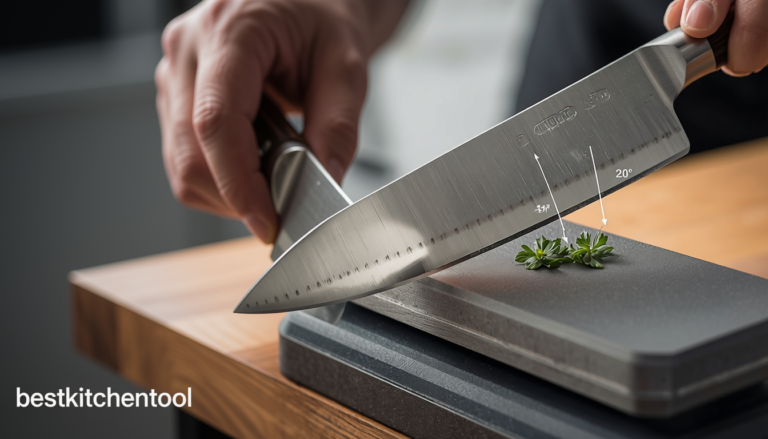
- Set the bevel angle. For most kitchen knives, hold the blade at 15–20 degrees.
- Draw the knife across the stone, edge-first, from heel to tip. Use gentle, even strokes.
- Repeat on the other side. Keep the angle steady.
- Check the edge. If it’s sharp, move to the fine grit (6000).
- Polish with lighter strokes.
- Clean the knife and stone after sharpening.
Sharpening A Chef’s Knife Example
Imagine your German chef’s knife is dull. Start with 1000 grit. Hold at 20 degrees. Slide each side across the stone 10–20 times. Move to 6000 grit for a smoother edge. Test on a tomato—if it slices clean, you’re done.
Japanese Knives: Extra Care
Many Japanese knives use harder blade steel. They can take a sharper angle (12–15 degrees). Use 1000 grit, then finish with 3000–8000 for a mirror edge. Don’t use coarse stones unless repairing chips.
Grit And Blade Steel: What To Know
German knives (like Wüsthof, Zwilling) use softer stainless steel. They tolerate coarse stones and can be sharpened at 20 degrees. Japanese knives (like Shun, Global) use harder, more brittle steel. They need finer stones and a shallower angle (12–15 degrees).
Sharpening at the right angle protects edge retention—how long the knife stays sharp. Too coarse a stone will eat away Japanese steel. Too fine a stone won’t fix a dull German knife.
How Often Should You Sharpen?
For home cooks, sharpen every 2–6 months. Use a honing steel weekly for maintenance. If you use your knife daily, sharpen more often. Japanese knives need less frequent sharpening but more careful honing.
Common Beginner Mistakes
Avoid these errors for better results:
- Using the wrong grit: Too coarse wears out knives; too fine won’t fix dull edges.
- Wrong angle: Too flat or too steep weakens the edge.
- Skipping progression: Jumping from coarse to fine misses sharpening steps.
- Not soaking the stone: Dry stones don’t cut well.
- Too much pressure: Let the stone do the work; heavy force chips knives.
- Not cleaning knives after sharpening: Metal dust can be unsafe for food.
Knife Sharpening Grit Progression Table
To make things clearer, here’s a typical progression for kitchen knives:
| Step | Grit Range | Purpose |
|---|---|---|
| 1. Repair | 200–400 | Remove chips, fix broken edges |
| 2. Sharpen | 800–2000 | Restore sharpness |
| 3. Polish | 3000–8000+ | Smooth and refine edge |
Safety Tips For Sharpening
Knife sharpening can be risky if you rush. Always:
- Keep fingers away from the edge.
- Hold the stone steady—use a non-slip mat.
- Work slowly; focus on the angle.
- Wipe knives after sharpening to remove grit.
- Store stones dry to avoid bacteria.
How Grit Affects Edge Retention
Edge retention means how long your knife stays sharp. If you use a coarse stone too often, the edge gets sharp but dulls fast. A medium grit (1000–2000) is a sweet spot. Finishing with a fine stone (3000+) helps the edge stay sharper longer, especially for slicing proteins or vegetables.

Credit: seidoknives.com
Japanese Vs. German Knives: Grit Needs
Japanese Knives
- Harder steel (HRC 60+)
- Take a sharper angle (12–15°)
- Need finer stones (finish with 3000–8000)
- Avoid coarse stones unless repairing
German Knives
- Softer steel (HRC 56–58)
- Sharpen at 20°
- Medium stone (1000) works for most jobs
- Coarse stone okay for big repairs
How To Test Sharpness
After sharpening, test your knife. Try these:
- Paper test: Slice printer paper—should cut smoothly.
- Tomato test: Slice a tomato without squashing.
- Shave arm hair (optional): Shows razor edge.
If the knife fails, repeat the medium grit step.
When To Use Honing Steel
A honing steel is for maintenance, not sharpening. It straightens the edge between uses. Run the knife down the steel at the correct angle a few times before each use. If it doesn’t cut well after honing, it’s time to use your stone.
How To Choose A Sharpening Stone
When buying a stone, look for:
- Grit size: Get a 1000/6000 combo for most needs.
- Size: Bigger stones are easier to use.
- Type: Water stones are easiest for beginners.
- Brand: Reputable brands give consistent grit.
Avoid very cheap stones—they may wear out or cut unevenly.
Maintenance Tips For Stones
- Flatten stones regularly (they wear unevenly).
- Wash after use; let dry fully before storing.
- Store in a cool, dry place.
A warped or dirty stone gives poor results.
Advanced: Micro-bevels And Polishing
Once you master basic sharpening, try adding a micro-bevel—a slightly steeper angle at the edge. This boosts strength on Japanese knives. Use a fine stone (3000+) and raise the angle by 2–3 degrees for a few strokes. This helps edge retention, especially with hard vegetables.
Common Questions From Beginners
- Should I buy a whetstone or a pull-through sharpener? Whetstones give better control and edge quality, but require more skill.
- Is a high grit (like 8000) necessary? Only if you want a very fine edge, or for Japanese knives.
- Can I sharpen serrated knives on a stone? No—use a special rod or send to a pro.
- How do I know my angle? Use an angle guide or practice with a marker on the edge.
- Do I need oil? Water stones use water. Oil stones use oil. Never mix.
Real-life Example: Home Cook’s Sharpening Routine
Maria, a home chef, uses her 1000/6000 grit water stone every 3 months. She hones her chef’s knife weekly. She sharpens her paring knife less often. For her Japanese Santoku, she finishes on 8000 grit for a super-fine edge. Her knives stay sharp, and cooking is safer and more fun.

Credit: sharppebble.com
Where To Learn More
If you want in-depth sharpening techniques, check out Chef’s Knife Works for expert videos and tips.
Final Thoughts
Choosing the right grit sharpening stone for kitchen knives makes a huge difference. For most cooks, a 1000 grit whetstone handles regular sharpening. Add a fine stone (3000+) for a polished edge, especially on Japanese knives. Use coarse stones only for repair. Pay attention to blade steel, angle, and proper technique. With practice, you’ll keep your knives razor-sharp, safe, and enjoyable to use.

Credit: cooking.stackexchange.com
Frequently Asked Questions
What Is The Best Grit For Everyday Kitchen Knife Sharpening?
A 1000 grit stone is best for routine sharpening of most kitchen knives. It balances fast sharpening and edge quality. For extra sharpness, finish with a 3000 or 6000 grit stone.
Can I Sharpen All My Knives With Just One Stone?
Yes, a 1000 grit whetstone is enough for most knives. But for a very dull blade, start with a coarse grit (400). For a razor edge, finish with a fine grit (3000+).
How Do I Know If My Knife Needs Sharpening Or Just Honing?
If a honing steel no longer restores the edge, your knife needs sharpening with a stone. Honing straightens; sharpening removes metal to create a new edge.
Are Japanese Knives Harder To Sharpen Than German Knives?
Japanese knives need more care. They use harder steel and a sharper angle. Use finer stones and keep the angle steady. German knives are more forgiving and can handle coarser stones.
How Often Should I Sharpen My Kitchen Knives?
For home cooking, sharpen every 2–6 months, depending on use. Hone weekly. Sharpen more often if you cook daily or use Japanese knives.
With the right grit and technique, you’ll enjoy sharp, safe knives for every meal.

Hi, I’m Emma Carter, a passionate home cook with over 12 years of hands-on experience in home kitchens. I love testing kitchen tools, trying new recipes, and helping everyday cooks make smarter buying decisions. Every review and guide I write is based on real cooking experience, practical testing, and honest opinions, not marketing claims.