What Angle to Sharpen Kitchen Knives for Razor-Sharp Results
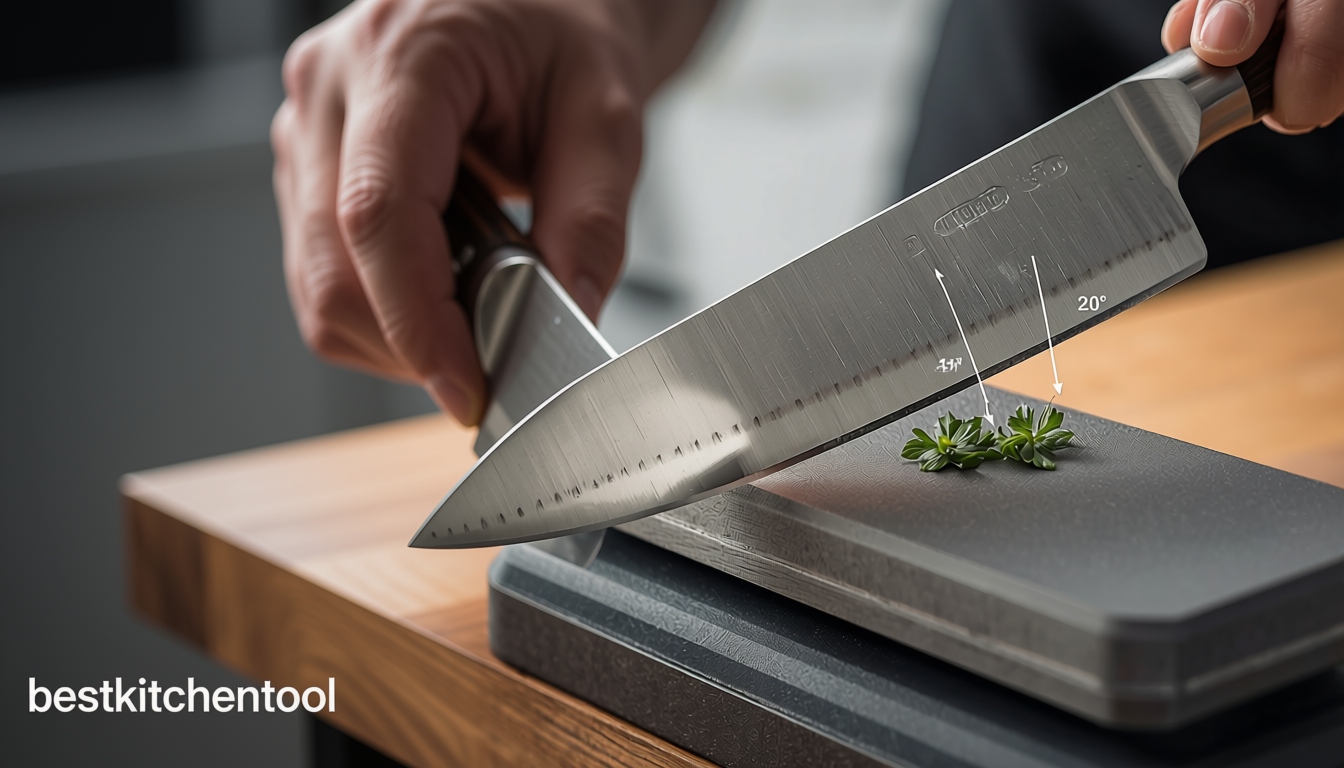
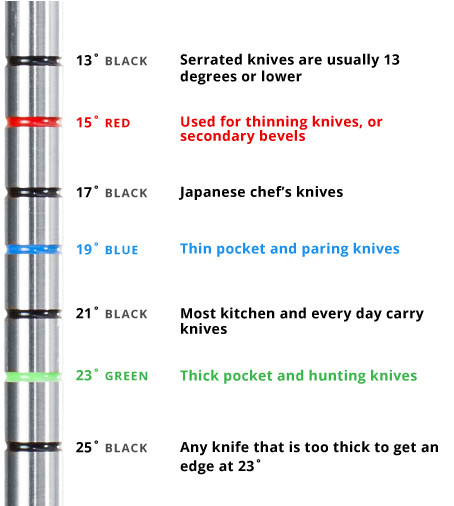
Many home cooks want to know the right angle to sharpen kitchen knives. You are probably searching because your knife feels dull, food prep takes longer, or you worry you may damage your blade. The simple answer: most kitchen knives should be sharpened at a bevel angle between 15 and 20 degrees per side. This range keeps your edge sharp but strong. For example, a chef’s knife often uses 20 degrees, while a Japanese knife can be as low as 15 degrees. In this article, you’ll learn exactly why this angle matters, how to measure it, what tools to use, and how to sharpen safely. You’ll also see common mistakes and expert tips for better edge retention and longer-lasting blades.
Why Sharpening Angle Matters
The sharpening angle decides two things: how sharp your knife can get and how long the edge lasts. A lower angle gives you a finer, sharper edge, great for slicing soft foods. But, a smaller angle is also weaker. A higher angle gives you a stronger edge, which lasts longer and handles tougher foods.
Most kitchen knives use a double bevel (both sides sharpened). The angle you choose must match the knife’s job and blade steel.
Sharpness Vs Strength
Think of the bevel angle as a balance:
- 15-degree angle: Very sharp, cuts easily, but edge is thin and can chip.
- 20-degree angle: Less sharp, but stronger edge, better for tough jobs.
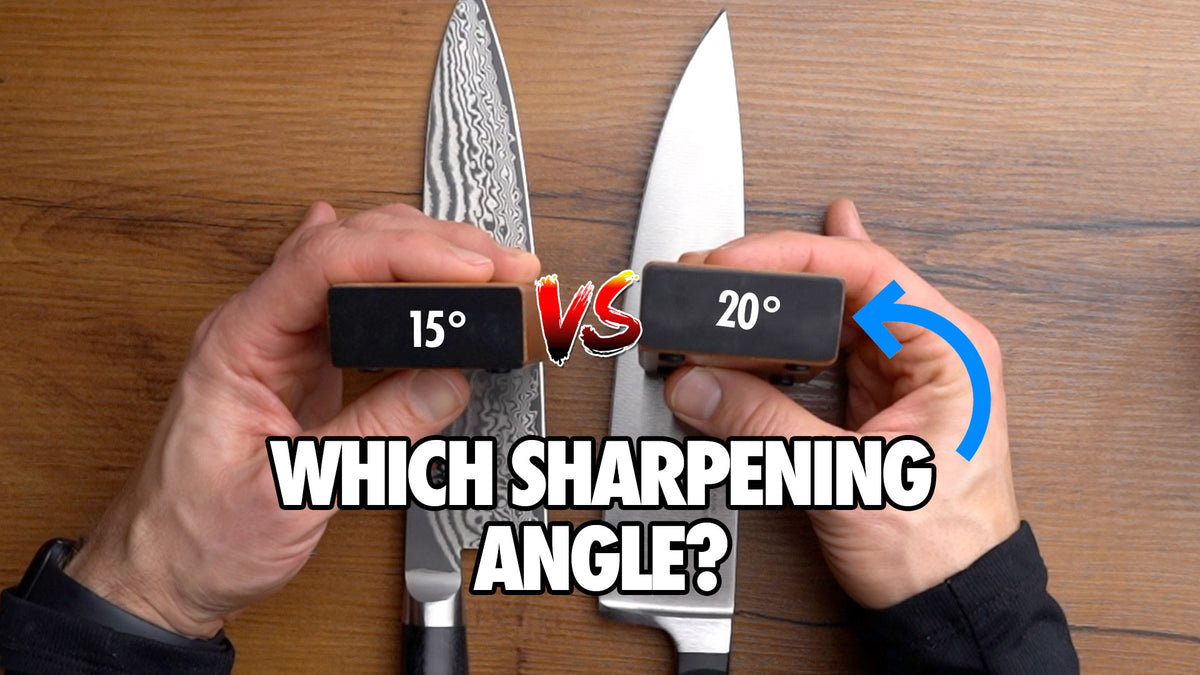
Japanese knives (like Santoku or Gyuto) often use 15 degrees. They slice fish and vegetables easily, but can chip if used on bones or frozen foods. German knives (like Wüsthof or Zwilling) use 20 degrees. They handle tough cutting, like meat and hard vegetables.
Edge Retention
Edge retention means how long your knife stays sharp. Sharpening at the right angle helps edge retention. If you sharpen too low, you’ll need to sharpen often. Too high, and the knife won’t cut well.
Blade steel also matters. Harder steels (like in Japanese knives) hold a sharp edge longer but are brittle. Softer steels (like in German knives) are tough but need sharpening more often.
How To Choose The Best Sharpening Angle
Choosing the right angle depends on your knife type, blade steel, and cooking style.
Knife Types And Recommended Angles
Here’s a quick guide for common kitchen knives:
| Knife Type | Recommended Angle (per side) | Purpose |
|---|---|---|
| Chef’s Knife (German) | 20 degrees | All-purpose, tough jobs |
| Chef’s Knife (Japanese) | 15 degrees | Fine slicing, vegetables, fish |
| Paring Knife | 18 degrees | Precision, peeling |
| Santoku | 15 degrees | Slicing, chopping |
| Utility Knife | 17 degrees | General use, slicing |
| Cleaver | 22 degrees | Chopping bones, tough foods |
| Boning Knife | 17 degrees | Removing bones, filleting |
Most home cooks use chef’s knives and paring knives. Stick to 15-20 degrees for a safe, sharp edge.
Blade Steel And Angle
Blade steel affects your choice:
- High-carbon steel: Sharpen at lower angles (15–17 degrees). Stays sharp longer but is brittle.
- Stainless steel: Sharpen at higher angles (18–20 degrees). Tough, resists corrosion, but needs sharpening more often.
If unsure, check your knife brand’s website or manual.
Tools For Sharpening Kitchen Knives
You need the right tools to sharpen at the correct angle. Here are the most common:
Whetstone
A whetstone (also called sharpening stone) is the best tool for control. You can adjust the angle by hand. There are different grits:
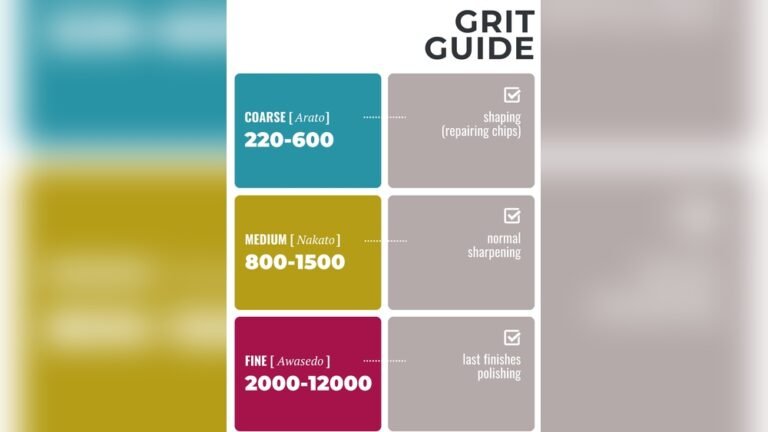
- Coarse (200–600 grit): For repairing dull or damaged edges.
- Medium (1000–3000 grit): For sharpening.
- Fine (4000–8000 grit): For polishing and finishing.
Use a guide to keep your angle steady. Some whetstones come with a plastic angle guide.
Honing Steel
A honing steel does not sharpen. It straightens the edge and maintains sharpness. Use it often, but don’t rely on it for sharpening.
Pull-through Sharpeners
These sharpeners are fast and easy but often use preset angles. Some models allow you to choose the angle. Check the manual before use.
Electric Sharpeners
These are quick and handy. Like pull-through sharpeners, they often have set angles. Not all work well for Japanese knives.
Angle Guides
Angle guides are plastic or metal clips that attach to your blade, helping you keep a steady angle. They’re helpful for beginners using a whetstone.
| Sharpening Tool | Control Over Angle | Best For |
|---|---|---|
| Whetstone | High | All knives, custom angles |
| Honing Steel | Medium | Edge maintenance |
| Pull-Through Sharpener | Low-Medium | Quick sharpening |
| Electric Sharpener | Low-Medium | Fast sharpening, preset angles |
| Angle Guide | High | Beginner use with whetstone |
How To Sharpen Your Kitchen Knife
Sharpening your knife is simple if you follow safe steps and use the right angle.
Step-by-step Sharpening With Whetstone
- Soak the whetstone: If it’s a water stone, soak for 5–10 minutes. Oil stones need a few drops of oil.
- Place the stone: Put it on a non-slip surface.
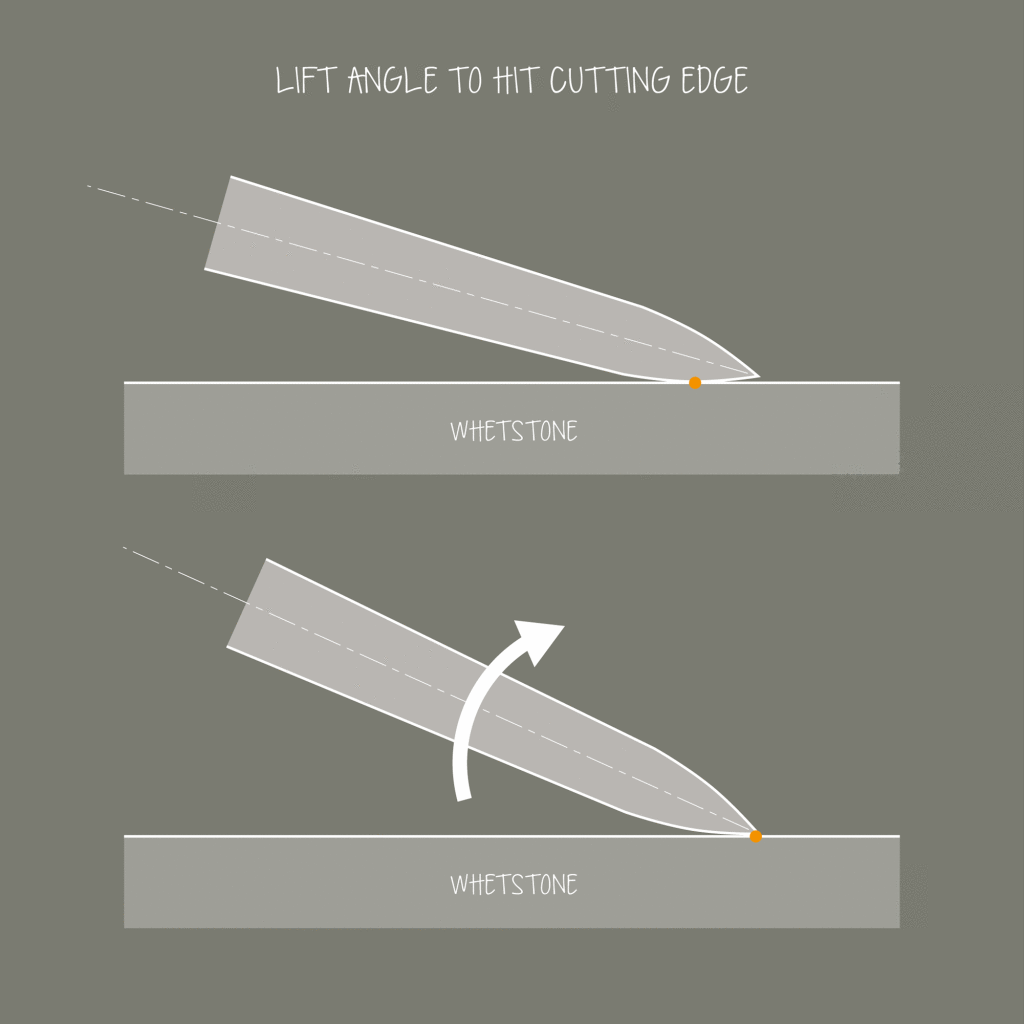
- Set your angle: Use an angle guide or estimate. For a 15–20 degree angle, place the blade so it’s about one matchbook thick from the stone.
- Draw the blade: Slide the blade from heel to tip across the stone, keeping your angle steady.
- Repeat: Do 8–10 strokes per side. Switch sides.
- Change grit: Move to a finer stone and repeat.
- Rinse and dry: Clean the blade and stone.
If you use a honing steel, hold the knife at the same angle (15–20 degrees) and sweep the blade down and across the steel.
Expert Advice
- Use gentle pressure. Too much force can damage the edge.
- Don’t rush. Slow, steady strokes give better results.
- Finish with a fine grit for a smooth edge.
How To Check Your Angle
Many beginners worry about keeping the angle right. Try these tips:
- Use an angle guide for training.
- Stack two coins under the spine for about 20 degrees.
- Practice with a ruler to see the angle.
Common Sharpening Mistakes
Some mistakes can ruin your knife or make it dull faster. Avoid these:
- Wrong angle: Sharpening at too high an angle makes the edge blunt. Too low, and it chips.
- Uneven strokes: If you sharpen one side more, the edge won’t be centered.
- Skipping grits: Don’t move from coarse to fine without medium. You’ll miss sharpening.
- Too much pressure: This wears out the blade.
- Not cleaning the stone: Metal builds up and reduces sharpening.
Expert tip: Always dry your knife after sharpening. Water and steel can cause rust.
Safety Tips For Sharpening
Sharpening can be dangerous if you’re not careful. Keep these tips in mind:
- Use a non-slip mat under your stone.
- Keep fingers away from the blade edge.
- Don’t rush. Take your time.
- Wear cut-resistant gloves if you’re new.
- Always wipe the blade away from your hand.
Edge Retention And Maintenance
Sharpening is only part of keeping your knife sharp. Maintenance matters too.
Honing
Use a honing steel every few uses to keep the edge straight. This does not sharpen but helps edge retention.
Proper Storage
Store knives in a block, sheath, or magnetic strip. Never toss them in a drawer.
Cutting Surface
Use wood or plastic cutting boards. Avoid glass, marble, or metal—they dull blades fast.
Cleaning
Wash knives by hand. Don’t put them in the dishwasher. Heat and water can damage both edge and handle.
Japanese Vs German Knives: Sharpening Differences
Japanese knives and German knives need different sharpening angles because their blade steels and shapes are different.
Japanese Knives
- Sharpen at 15 degrees per side.
- Harder steel (like VG-10, Blue Steel).
- Edge is very sharp, but can chip.
- Used for precision slicing.
German Knives
- Sharpen at 20 degrees per side.
- Softer steel (like X50CrMoV15).
- Edge is tougher, less sharp.
- Used for chopping and heavy use.
| Feature | Japanese Knives | German Knives |
|---|---|---|
| Sharpening Angle | 15 degrees | 20 degrees |
| Blade Steel | Hard, brittle | Soft, tough |
| Edge Retention | Longer, needs care | Shorter, more forgiving |
| Best Use | Precision, slicing | Heavy chopping |
If you own both types, sharpen each at their recommended angle.
Credit: www.tumblerware.com
How Often Should You Sharpen Your Kitchen Knife?
Sharpening frequency depends on knife use, blade steel, and cutting surface.
- Home cooks: Sharpen every 3–6 months.
- Professional chefs: Sharpen every 2–4 weeks.
- Honing: Use honing steel every few uses.
If your knife drags or smashes food, it’s time to sharpen.
Measuring And Maintaining The Angle
Keeping a steady angle is a skill, but there are tools and tricks.
Measuring The Angle
- Angle guides: Clip-on guides help beginners.
- Smartphone apps: Some apps measure angle using your camera.
- Visual cues: For 15–20 degrees, the blade should be just off flat—about the height of a pencil or coin under the spine.
Maintaining The Angle
- Practice with slow strokes.
- Use both hands: One for the handle, one for the blade spine.
- Watch videos or take a class for better technique.
Advanced Sharpening: Single Bevel And Specialty Knives
Some knives have a single bevel (sharpened on one side only). These are mostly Japanese specialty knives like Yanagiba or Deba.
- Single bevel knives use angles as low as 10–12 degrees.
- Sharpening requires skill and practice.
- Always check your knife’s manual or consult a professional.
Practical Examples
Let’s see how this works for common knives:
Chef’s knife (German): You chop onions, carrots, and meat. Sharpen at 20 degrees. Use a whetstone with coarse, medium, and fine grits. Finish with honing steel.
Santoku (Japanese): You slice fish and veggies. Sharpen at 15 degrees. Use a whetstone, and be gentle to avoid chipping the edge.
Paring knife: You peel apples and prep small foods. Sharpen at 18 degrees. Use medium and fine grit for a smooth edge.
Non-obvious Insights For Beginners
- Sharpening angle isn’t always fixed. Over time, repeated sharpening can change the edge profile. You may need to adjust the angle slightly.
- Knife thickness matters. Thicker blades (like cleavers) need higher angles to avoid breaking. Thin blades can use lower angles.
- Your cutting style affects edge retention. If you press hard or twist the knife, the edge wears faster, even if sharpened at the right angle.
When To Seek Professional Sharpening
If your knife is expensive, very dull, or has chips, consider a professional. They have machines and stones for perfect angles. If you own Japanese knives, some shops offer specialized sharpening.
Credit: www.edgeproinc.com
Improving Your Sharpening Skills
Sharpening is a skill you build over time. Start with easy knives and use angle guides. Watch tutorials, read manuals, and practice regularly. Even pros make mistakes, so don’t worry if your first results aren’t perfect.
Frequently Asked Questions
What Is The Best Angle To Sharpen A Chef’s Knife?
Most chef’s knives sharpen best at 15–20 degrees per side. If your knife is Japanese, use 15 degrees. If it’s German, use 20 degrees.
Can I Use A Honing Steel Instead Of Sharpening?
No. A honing steel straightens the edge but does not sharpen. You still need to use a whetstone or sharpener every few months.
How Do I Know If I’m Sharpening At The Right Angle?
Use an angle guide or visual cues. For 15–20 degrees, the blade should be just off flat—about two coins under the spine.
Is It Bad To Sharpen Too Often?
Sharpening removes metal. Too much sharpening can wear out your blade. Hone often, sharpen only when needed.
What’s The Difference Between Single Bevel And Double Bevel Knives?
Single bevel knives are sharpened on one side only (common in Japanese knives), allowing for sharper but weaker edges. Double bevel knives are sharpened on both sides, making the edge stronger and more suitable for most kitchen tasks.
Sharpening your kitchen knives at the correct angle makes cooking safer, faster, and more enjoyable. With the right tools, careful technique, and regular maintenance, your knives will stay sharp for years. If you want more details, visit the Wikipedia page on sharpening stones for deep information. Remember: practice, patience, and care are the keys to perfect knife sharpening.
Credit: togknives.com
Hi, I’m Emma Carter, a passionate home cook with over 12 years of hands-on experience in home kitchens. I love testing kitchen tools, trying new recipes, and helping everyday cooks make smarter buying decisions. Every review and guide I write is based on real cooking experience, practical testing, and honest opinions, not marketing claims.